
Sequoyah Projected Versus Actual Release
A projected release date is an administrative calculation based on the information then in the sentence record. Oklahoma Department of Corrections calls a date calculated from remaining days tentative. It can change. An actual release is a completed custody event shown by a release record, Certificate of Release, status-change notice, or another official movement record.
Three dates often get confused. A parole-eligibility date marks when a person may be considered under the governing rules. A projected release date estimates the sentence endpoint or release path as administered. The actual release date records what occurred. The Oklahoma Pardon and Parole Board’s result sheets reinforce this distinction by placing “PE DATE,” “PRD,” and “BOARD ACTION” in separate columns.
A person awaiting trial at Sequoyah County Jail generally has no computed sentence-release date. Bond acceptance, a signed court order, dismissal, a plea, or later sentencing can change custody. Even time served on one matter may not cause a walk-out when another hold exists.
Find Sequoyah Projected Release Dates
The right source follows the sentence. ODOC records cover a person serving an Oklahoma state sentence or under ODOC supervision. The Sequoyah County Sheriff and the court record cover a county booking or county-jail sentence. Federal and immigration custody use separate systems and should not be inferred from a missing county result.
- Identify the last custodian. Decide whether the person is a pretrial county detainee, a county-sentenced person, an ODOC prisoner, or held by another authority.
- For a state prisoner, open the ODOC Offender Lookup. Search by ODOC number when possible, then match the name, identifiers, case rows, and status.
- Transcribe any date label exactly. Do not turn an eligibility date, sentence end, or board date into a projected release date.
- For a county sentence, obtain the judgment, jail commitment, and credited pretrial days from the court and jail. Ask for the jail’s actual credited-days calculation.
- Check for consecutive cases, detainers, amended judgments, and parole action. These can change the path even when the main sentence appears complete.
- When the person has left custody, replace the projection with the actual release or transfer record. The Sequoyah County released-inmate lookup explains the county verification chain.
The ODOC search and its released, discharged, and projected-date result screens are shown in the official offender lookup capture below.
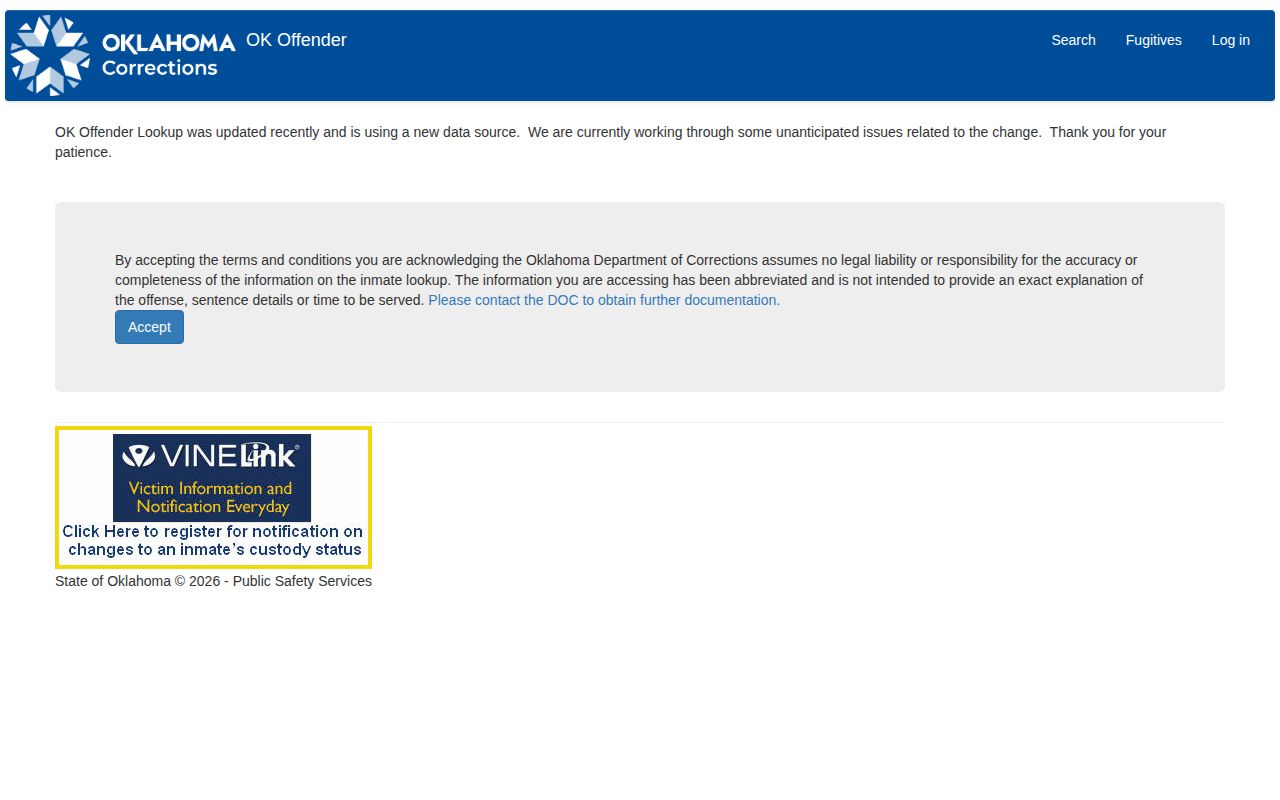
The field context matters as much as the date. A status, facility, supervision label, and sentence row help show whether the entry concerns current prison custody, parole, probation, or a past discharge.
When several sentence rows appear, do not select the earliest date without checking which terms control. One case may run after another. A county name may mark the court of conviction rather than the current prison location. Record the ODOC number and each linked case before asking Sentence Administration to explain a discrepancy.
Sequoyah Release-Date Access Limits
ODOC’s Offender Information page says an inmate’s exact release date is confidential unless the requester shows a legitimate need, such as a judicial or law-enforcement need. ODOC gives the inmate the number of days remaining at month-end. The inmate may calculate the date or ask the facility correctional-records officer or case manager for help.
That rule limits what a general caller should expect. A public result may show sentence and status information without exposing an exact future day. If a live record does display a projected field, use its exact label and retrieval date. Do not claim that ODOC must disclose a confidential date merely because a person asks.
The official access and tentative-date guidance appears in the ODOC source captured here.
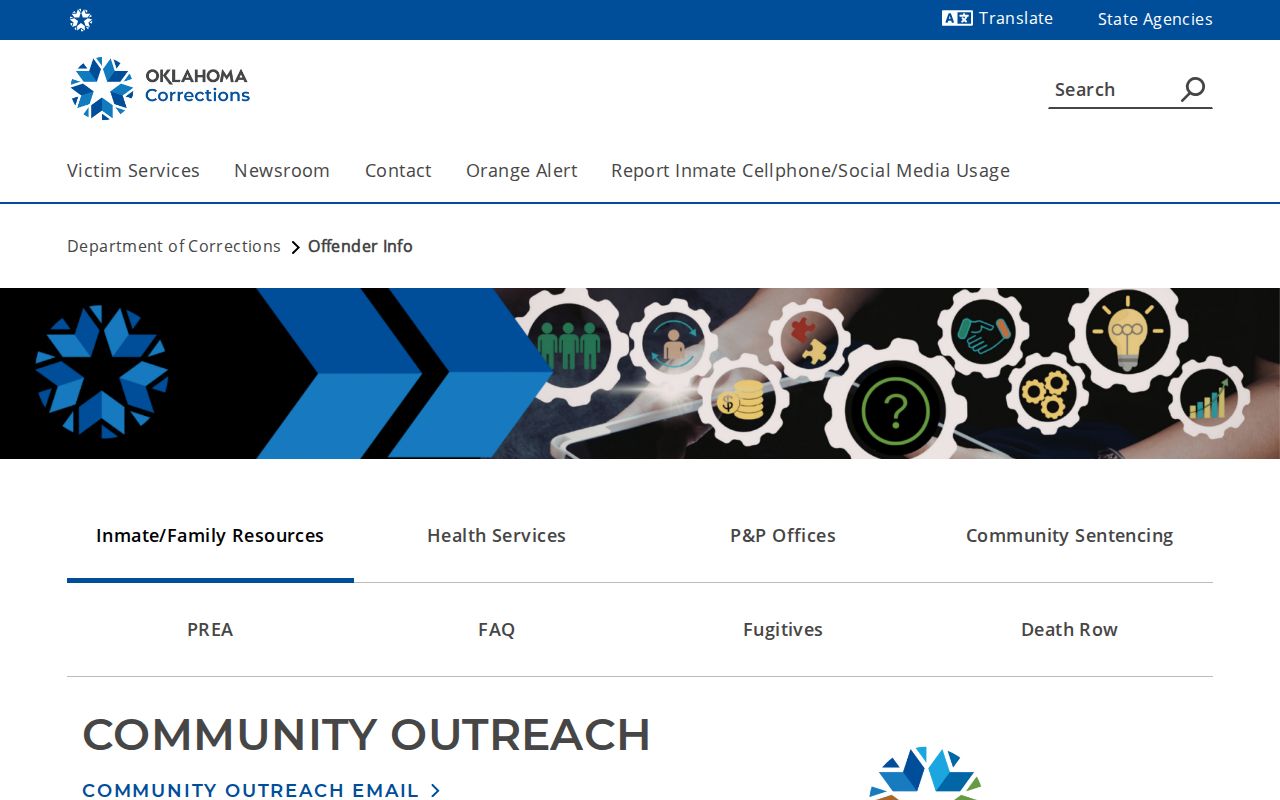
This guidance is why a sentence estimate should stay labeled tentative until an official status or release record confirms the event.
Note: Public sentence data can aid verification, but it does not create a right to confidential future release information.
Sequoyah Sentence-Date Computation Records
Oklahoma’s calculation is not a simple subtraction from the sentence written in court. The starting record must identify the controlling sentence, its commencement, jail credit, and whether multiple terms run at the same time or one after another. ODOC then administers credits, lawful adjustments, parole or other release authority, and new information that affects the sentence.
A sound conceptual sequence is: begin with the judgment and sentence; apply the commencement date and credited jail days; account for concurrent or consecutive terms; subtract credits actually awarded; restore lost or revoked credit where the record requires it; incorporate amended judgments and parole action; then resolve detainers and added cases. Each input must come from an official record. The nominal term alone is not enough.
ODOC Sentence Administration identifies records that can document these inputs. They include the Time Calculation Audit Form, DOC 060211D; Consolidated Record Card, 060211H; Monthly Offender Evaluation Time Credit Report, 060211M; Certificate of Release, 060211N; and Notice of Inmate Status Change, 060211O. The Sentence Administration forms and policy index is the official starting point.
These records also separate prediction from proof. The audit and monthly credit report help explain a provisional balance. The consolidated card supplies the broader administered history. The certificate and status-change notice document a completed movement. Ask only for the parts that are public or authorized, and identify the exact form when a broad request would create doubt.
- Concurrent sentence
- Two or more terms run at the same time as directed by the court.
- Consecutive sentence
- One term begins after another, which can extend the controlling endpoint.
- Jail credit
- Time the official sentence record credits for qualifying custody before or during sentence administration.
- Detainer
- A hold or request from another authority that may cause transfer or continued custody.
Sequoyah Release Credits Under Section 138
Title 57 O.S. §138 governs Oklahoma’s earned-credit framework. It contains classifications, qualifications, exclusions, achievement provisions, and consequences. The version that applies can depend on offense and custody dates. Future class levels, achievements, or misconduct cannot be known with certainty from outside the correctional records system.
Credits therefore should not be estimated by using a fixed number of days for every month. ODOC calculates what has actually been earned, lost, restored, or otherwise applied. A court judgment supplies key sentence terms, but it does not predict all future credit events. The monthly credit report and calculation audit are stronger sources for an administered figure, subject to confidentiality and authorization rules.
A Sequoyah County jail sentence needs its own record path. Do not apply ODOC class-credit rules to it by rote. The signed judgment, jail commitment, credited pretrial days, county practices authorized by law, and actual jail release record control. Ask the jail and court for the credited-days calculation rather than borrowing a state-prison formula.
Note: “Good time” is not one fixed discount; only credits actually awarded in the controlling system affect the administered date.
Sequoyah Release and the 85% Rule
Title 21 O.S. §13.1 lists specified serious offenses for which a person must serve at least 85 percent of the sentence before becoming eligible for parole consideration. Credits generally cannot reduce that mandatory portion in the usual way. This is an offense-specific list, not a rule that every Oklahoma prisoner serves exactly 85 percent.
Verify the exact conviction statute and offense date against current law. Multiple counts, enhancements, consecutive terms, and later amendments can complicate the result. A broad label for an offense is not enough to perform the calculation. The judgment and sentence identify the conviction, while ODOC administers the sentence data.
Reaching 85 percent does not guarantee release. It marks a statutory minimum or eligibility boundary for a covered offense. Parole may be granted, recommended, passed, denied, or conditioned, and the person may remain in custody until a later discharge. PPB’s PE DATE and PRD entries must be read with the Board Action and later ODOC status.
Monthly PPB PDFs can be long and may contain several entries tied to one person. Search by ODOC number first, then verify the name, Sequoyah case, offense count, and sentence. Placeholder values or a date on a noncontrolling row should not be used as the answer. The later ODOC record remains the better source for the administered custody state.
Why Sequoyah Release Dates Move
A projected date changes when any controlling input changes. ODOC policy tracks parole and discharge recalculations, new detainers, amended judgments, added jail time, and other status events. Some changes move a date. Others keep the date but change the destination from community release to another authority.
| Factor | Possible effect | Record to check |
|---|---|---|
| Earned-credit level or achievement credit | Credits actually awarded may reduce remaining time | Monthly credit report and calculation audit |
| Misconduct or lost credit | The administered date may move later | ODOC sentence and credit records |
| Corrected sentence or jail credit | The starting date or balance may change | Amended judgment, commitment, and calculation record |
| Concurrent or consecutive case terms | Another sentence may alter the controlling endpoint | All judgments and consolidated record card |
| Parole decision and processing | The release route may change, but a vote is not the exit event | PPB result, ODOC status, and Certificate of Release |
| Detainer or added case | Release from one sentence may become transfer or continued custody | Status-change notice and receiving agency record |
Death, release to ICE, and other status changes also appear in Sentence Administration materials. They are not ordinary community releases. The destination field and receiving agency must be checked before stating where the person went.
Confirm Sequoyah County Actual Release
Once the date arrives, look for a completed event. For ODOC custody, read the current offender status and seek the Certificate of Release or Notice of Inmate Status Change when documentary proof is needed. For Sequoyah County Jail, request the booking and release record with the release date, time, type, and destination. A person who leaves the county roster may have been released or transferred.
Oklahoma VINE can provide a custody-change alert when the reporting data is present. Registration does not guarantee instant delivery, and the alert does not explain every sentence input. The Sequoyah County VINELink check covers the official person search and alert steps. Corroborate the notice with the custodian’s movement record when the exact release type matters.
For ODOC discharge records, Legal Services identifies osordischarges@doc.ok.gov as a discharge inquiry route. Give the full name, ODOC number, suitable identifying details, Sequoyah case number, and the precise record requested. Confidential parts may require authorization. A focused request for a Certificate of Release and status-change notice is more useful than asking staff to predict a date.
Note: The best final answer is the actual release or transfer record, not an earlier estimate copied from a docket.