
Sequoyah Federal Release Path
Federal facilities serving a Sequoyah County case are outside the county. The operator depends on the stage. The U.S. Marshals Service manages many federal pretrial detainees and transports. The Federal Bureau of Prisons manages sentenced federal prisoners and its own custody records. A person can leave Sequoyah County Jail under a federal writ or transfer without being released to the community.
The best evidence follows that sequence. The sheriff movement record can show that local custody ended and identify the receiving agency. The federal docket can show the charge, detention order, judgment, sentence, or later supervision terms. The BOP locator can then show the sentenced prisoner’s BOP status, location, or historical release information. Each source answers a separate question.
No BOP institution was found in Sequoyah County. A federal locator result naming another state or institution is therefore not a conflict. It reflects where BOP held or recorded the person after the locally arising case moved into the federal system.
Confirm Sequoyah Federal Inmate Release
Start with the person’s federal register number when available. It is safer than a common name. If no number is known, use the name fields and compare age, race, sex, case details, and other identity facts. A federal result should fit the same person and case before the release line is accepted.
- Open the official BOP Inmate Locator.
- Search by BOP Register Number when known, or use the complete name and offered biographical fields.
- Compare the register number, age, race, sex, and federal case information.
- Read the displayed location and release date together. Note whether the record says released or not in BOP custody.
- Open the federal judgment and docket to verify the sentence, supervised release, and later case action.
- If the person was pretrial or recently transferred, use the USMS and federal court path instead of treating a BOP nonmatch as release.
A past release date with no institution supports the end of BOP custody recorded in that entry. It does not prove that all legal control ended. Supervised release is a court-ordered period in the community after imprisonment. A state warrant, immigration hold, or later case may also affect the person.
Federal Release Locator Fields
The BOP locator covers federal records from 1982 forward. Its result fields help identify the person and interpret the release line. The release date must be read in the context of the location and federal record. A future date is projected and may change; a past date belongs to the BOP term shown.
| Locator field | How to read it |
|---|---|
| Name | Match the full legal name and account for known variants. |
| Register number | The strongest public identifier for the BOP record. |
| Age, race, and sex | Supporting identity fields that help separate similar names. |
| Release date | A past or future BOP date, interpreted with the status and federal judgment. |
| Location | The current institution or wording that no BOP institution holds the person. |
Records before 1982 require a National Archives route rather than the modern locator. BOP also warns that sentence recalculation can temporarily affect displayed dates. For a durable federal release record, pair the locator with the judgment and available BOP records. Do not use the county roster to infer a later federal discharge.
The successful manifest capture shows the official BOP locator and released-result context.
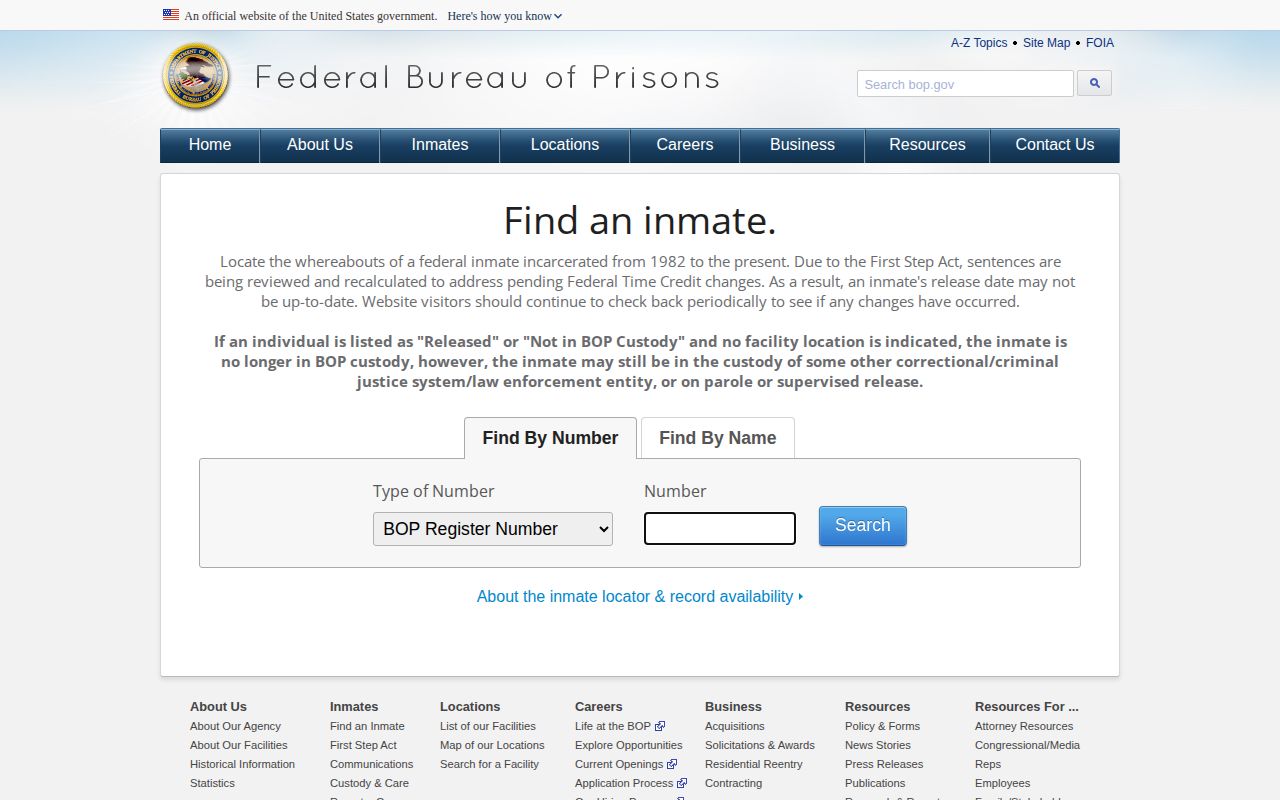
The image illustrates the search and result fields. The live BOP record and matching federal case remain controlling.
Note: A future BOP date is projected, while a past date confirms only the BOP custody term displayed.
Sequoyah Federal Case Context
Sequoyah County lies within the Cherokee Nation Reservation and the Eastern District of Oklahoma. Official federal materials document locally occurring Indian Country cases prosecuted in that district. That jurisdictional path explains why a person arrested or first held locally may later enter a federal case and a facility outside the county.
A Department of Justice Sequoyah County case example shows the local-to-federal connection. It is an example of jurisdiction, not proof that each county arrest becomes federal. Check the actual complaint, indictment, detention order, judgment, and custodian for the named person.
The local and federal records should be joined by identifiers. Save the county booking number and court case when a person leaves the Sequoyah County roster. In the federal file, match the name, date of birth when available, federal case number, offense, and sentence. This prevents a federal record with a similar name from being attached to the wrong county booking.
Note: Indian Country jurisdiction explains a possible federal route, but the named person’s docket and custodian establish the actual route.
Sequoyah Federal Pretrial Movements
The U.S. Marshals Service prisoner operations route matters before a federal sentence. USMS may manage detention, court production, and transport, but it does not offer a BOP-style public historical locator. Someone taken on a federal writ may vanish from the county current roster before the BOP locator provides a meaningful record.
A BOP nonmatch is therefore ambiguous. The person may be in a contract detention setting, moving under USMS authority, not yet sentenced, listed under a different spelling, or outside BOP custody for another reason. Search the Eastern District of Oklahoma federal case through PACER, read the detention and transfer entries, and contact the appropriate official channel if location is needed.
Pretrial release is also different from BOP release. A federal judge can order detention or conditional release before judgment. BOP’s historical release line concerns its recorded custody, not every federal court condition. The docket and signed order define the legal authority; the responsible custodian confirms the physical movement.
Note: A BOP nonmatch cannot establish pretrial release because USMS movements may occur before a useful BOP entry exists.
Federal Facility Release Records
There is no local federal facility records desk in Sequoyah County because no federal institution was identified there. Direct a request to the agency that created the record. Ask the sheriff for the local transfer record, the federal court for case documents, and BOP for sentenced-prisoner records that its access rules permit.
BOP Inmate Locator
PACER federal court records
USMS Prisoner Operations
Use the Eastern District of Oklahoma case number when known.
A focused request names the person, register number, date of birth when appropriate, federal case number, sentence, and exact document sought. Useful records may include the judgment, release date, facility movement, or supervision terms. Access and redaction rules differ by custodian. Ask for the releasable portion if part of the file is withheld.
The county release workflow in the Sequoyah County release records hub helps identify whether the starting event was a local exit, state transfer, federal movement, or another custody change. Only the federal route should be used for a BOP sentence.
Sequoyah Federal Release Date Limits
A displayed BOP date needs a time label. A past date can support the end of the BOP custody term shown. A future date remains projected. Sentence recalculation may change that future date, and temporary display changes can occur while BOP processes the calculation. The federal judgment states the sentence imposed, but it does not by itself prove the exact day the person physically left an institution.
For a Sequoyah County case, compare the locator date with the federal docket and any available BOP record. A release date does not erase supervised release ordered by the court. It also does not resolve an immigration transfer, state hold, or later incarceration. When the locator and docket seem inconsistent, confirm the register number and ask the agency that created the questioned record. Do not substitute a general sentence estimate for the administered federal result.
Older federal histories require another route. Because the public locator begins with 1982 records, earlier custody research belongs with the National Archives and the historic federal case file. That boundary should be stated rather than treating a modern nonmatch as proof of release.
After Sequoyah Federal Custody
Release from BOP custody can lead to supervised release, which the federal court administers through probation under the judgment. It can also lead to state or immigration custody when another lawful hold exists. The BOP release result alone does not describe those later events.
Check the federal docket for supervision terms and later revocation action. If an immigration transfer is plausible, use the ICE locator rather than BOP. If a state case remains, use the state court and custodian. When the BOP record shows a release date but the person cannot be contacted, follow the legal records and receiving agency instead of assuming the release result is wrong.
- Federal writ
- A court order used to bring a person before federal court while another custodian may retain legal control.
- Pretrial detention
- Custody before the federal case reaches judgment and sentence.
- Supervised release
- Court-ordered community supervision that follows a federal prison term.
- Register number
- The identifying number assigned within the federal prisoner record.